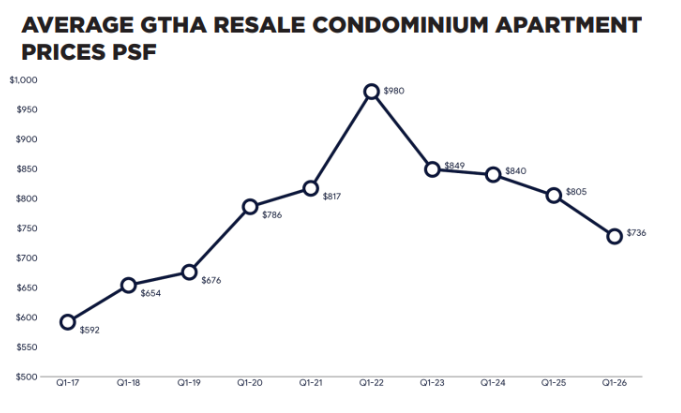
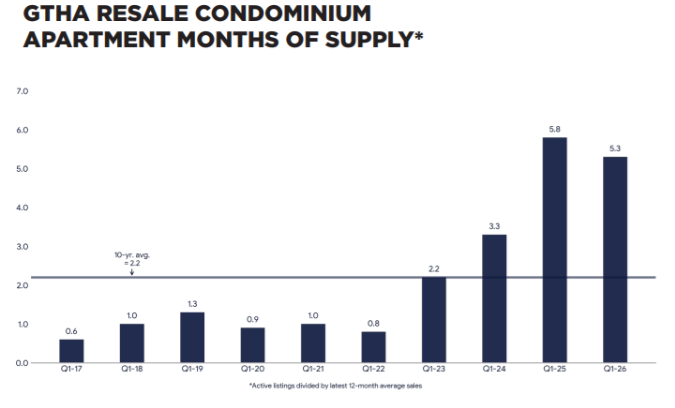
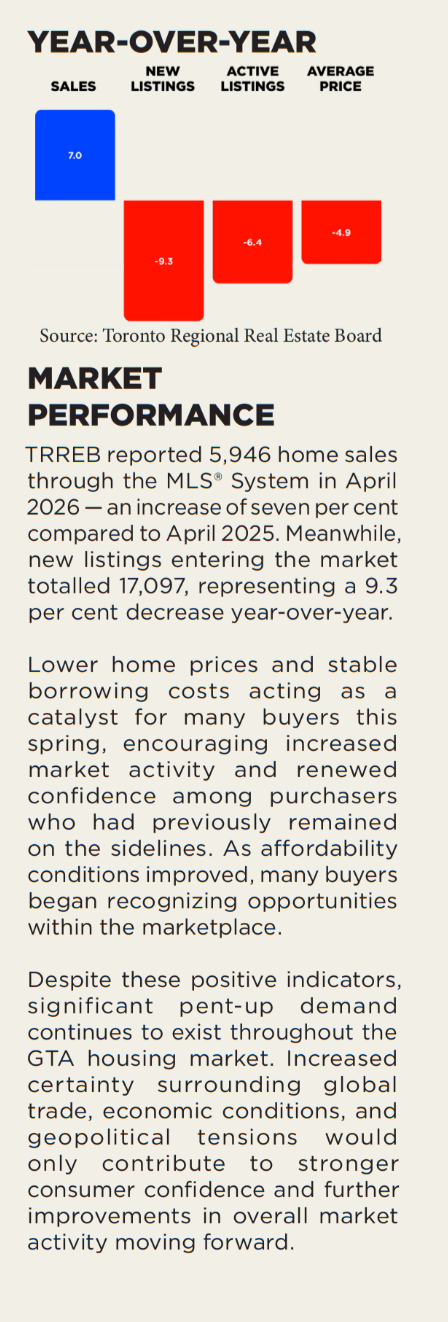
Traditionally, home listings begin to increase as the spring real estate market gains momentum. However, April 2026 continued to move against the trends typically seen during this time of year, as listing inventory declined while home sales increased on a year-over-year basis. This shift suggests that overall market conditions across the Greater Toronto Area tightened during the first full month of the spring market.
For more than a decade, rising development charges, taxes, and affordability pressures reshaped the condominium market, leading many builders to focus on constructing increasingly smaller units in an effort to maintain attainable pricing.
While this addressed affordability concerns for some purchasers, much of the housing product developed over recent years no longer aligns with the evolving needs of today’s market — particularly among downsizers and Canada’s growing aging population, who are seeking more functional and livable homes rather than simply smaller spaces.
Currently, approximately 18.9 per cent of the population is over the age of 65, and by 2030 that number is expected to approach 25 per cent. This demographic trend is anticipated to create a significant downsizing movement in the years ahead, further emphasizing the importance of more balanced housing options and practical condominium design.
It is encouraging to see all levels of government introducing HST relief and reductions to development charges in an effort to improve affordability and stimulate more balanced housing development. The full HST rebate alone is estimated to reduce the average price gap between new and resale condominiums from approximately 38 per cent to 20 per cent.
However, delayed policy responses often come with long-term consequences, and today those impacts are being felt across both the ownership and rental housing markets.